
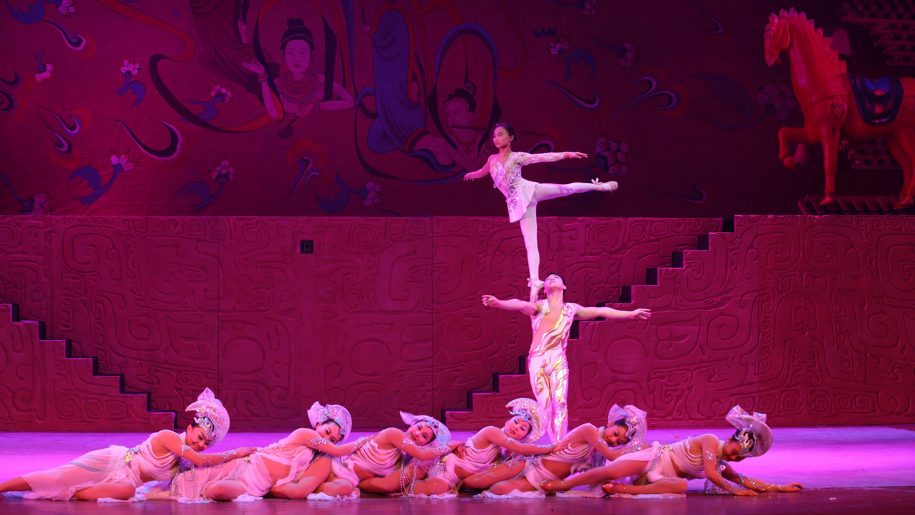
Chinese acrobatics, or Zájì (杂技), is among the world’s most enduring performing arts. Its history spans more than two and a half millennia, evolving from early folk traditions to a sophisticated art form that represents China’s cultural spirit, discipline, and imagination. Today, acrobatics is not only a national treasure but also a cultural ambassador that connects China with the world.
In Beijing, the renowned Chaoyang Theatre serves as a modern stage where ancient traditions and contemporary creativity merge seamlessly, offering audiences from across the globe an unforgettable experience.
This article provides an in-depth look at the origins, development, cultural importance, modern innovation, and future prospects of Chinese acrobatics.
I. Origins of Chinese Acrobatics — Rituals, Labor, and the Birth of Skill
The earliest forms of Chinese acrobatics originated during the Spring and Autumn Period (770–476 BC). Archaeological findings, ancient murals, and historical texts reveal that early acrobatic activities emerged from three main sources:
Farming and Physical Labor
Farmers practiced balancing, climbing, and lifting as part of their daily work. Over time, these movements evolved into:
- Rope walking
- Pole climbing
- Object balancing
- Human strength demonstrations
These acts were initially performed in village festivals and seasonal celebrations.
Ritual Performances
Ancient rituals honored ancestors and gods through elaborate displays. Acrobatics became part of these ceremonies, symbolizing:
- Strength
- Agility
- Good fortune
- Community unity
Military Training
Many early acrobatic movements derived from combat and martial arts techniques, such as:
- Tumbling
- Weapon juggling
- Performing flips in heavy armor
These skills later formed the foundation of performance-based acrobatics.
️II. Growth Under the Empires — From Folk Art to Royal Entertainment
Acrobatics developed significantly under imperial rule, especially during the Han, Tang, and Song Dynasties.
Han Dynasty — “Hundred Entertainments” (百戏)
The Han Dynasty (202 BC–220 AD) is widely regarded as the golden age of early Chinese acrobatics.
Emperor Wu of Han established large-scale performances combining:
- Sword swallowing
- Fire acts
- Plate spinning
- Animal imitations
- Juggling multiple objects
- Early rhythmic movement with drums
These were collectively known as “Baixi” (Hundred Entertainments) — the earliest formalized structure of Chinese acrobatics.
Tang Dynasty — Cultural Prosperity
During the Tang Dynasty, acrobatics gained even higher prestige due to imperial patronage.
Performances expanded to include:
- Giant puppet acrobatics
- Aerial stunts
- Multi-person balance formations
- Choreographed group routines
Foreign visitors often described Tang acrobatic shows as “breathtaking” and “unmatched by any kingdom,” highlighting their influence along the Silk Road.
Song Dynasty — Skill Refinement
The Song Dynasty brought refinement and artistic detail. Acrobatics became more theatrical, incorporating:
- Costumes
- Storytelling elements
- Precise choreography
Troupes became more organized, touring across regions and influencing folk culture.
III. Folk Acrobatics — The Heartbeat of the Community
Even as acrobatics thrived in imperial courts, its foundation remained rooted in local communities.
Village performers passed skills across generations, usually through family troupes. Children began training as early as age five, mastering:
- Flexibility
- Endurance
- Balance
- Rhythm
- Synchronization
Acrobatics became a source of:
- Livelihood
- Local pride
- Cultural identity
To this day, many professional acrobats in China come from these traditional acrobatic villages.
IV. Decline and Rebirth — The 20th Century Transformation
The early 20th century brought political instability, war, and societal transformation. Acrobatics, once a main form of entertainment, faced competition from:
- Modern theater
- Imported circus arts
- Cinema
- Public sports competitions
Despite these challenges, Chinese acrobatics experienced a remarkable revival after 1949, thanks to national efforts to preserve cultural heritage.
Key developments included:
- Establishment of professional acrobatic troupes
- Government-supported training academies
- International cultural exchanges
- Development of new performance techniques
- Integration of music, lighting, and artistic choreography
From the 1980s onward, Chinese acrobatics became a global sensation, winning dozens of international circus awards and gaining recognition in Europe, North America, and Asia.
V. Chinese Acrobatics Today — Precision, Innovation, and Global Recognition
Modern Chinese acrobatics remains deeply rooted in tradition but has evolved to meet the expectations of contemporary audiences.
Today’s performances, especially at world-famous venues like Chaoyang Theatre, combine:
Traditional Skills
- Diabolo spinning (空竹)
- Chair balancing
- Human pyramids
- Foot juggling (蹬技)
- Plate spinning
- Contortion
Modern Enhancements
- 3D projections
- LED lighting
- Cinematic sound design
- Dramatic staging
- Story-driven segments
Extreme Acts
- Motorcycle “Globe of Death”
- Aerial silk and rope
- High-wire walking
- Cyclic multi-person balance acts
Chaoyang Theatre has become particularly iconic because:
- It blends tradition and modernity flawlessly
- Shows are designed for international audiences
- Performers are among China’s best, often national champions
- The theatre performs daily, keeping the art form alive and evolving
VI. The Future of Chinese Acrobatics — Innovation Through Heritage
As China strengthens its cultural influence globally, acrobatics is poised for a new era of expansion.
Future trends include:
- Urban cultural tourism integration
Acrobatics will continue to be a highlight for visitors to Beijing, Shanghai, and Guangzhou. - Cross-genre performances
Acrobatics combined with:- Ballet
- Martial arts
- Opera
- Contemporary dance
- Digital theater
- International collaborations
Chinese acrobats are increasingly performing with:- Cirque du Soleil
- Global circus festivals
- Artistic theater companies
- Modern storytelling
Acrobatics will shift from “technique displays” to narrative-driven shows. - Youth training and preservation programs
Ensuring that ancient techniques continue through new generations.
Conclusion — A Living Legacy That Amazes the World
Chinese acrobatics is not simply entertainment; it is a cultural treasure, preserved through centuries of hardship, innovation, and dedication. Its legacy lives on today through the mastery of performers who dedicate their lives to pushing the boundaries of what the human body can achieve.
In Beijing, Chaoyang Theatre stands as a living embodiment of this heritage — a place where visitors from around the world witness the extraordinary beauty and discipline of an art form that began in ancient villages and now shines on the global stage.
For anyone wishing to understand Chinese culture, history, or performing arts, a live acrobatics show is not just recommended — it is essential.


Leave a Reply