
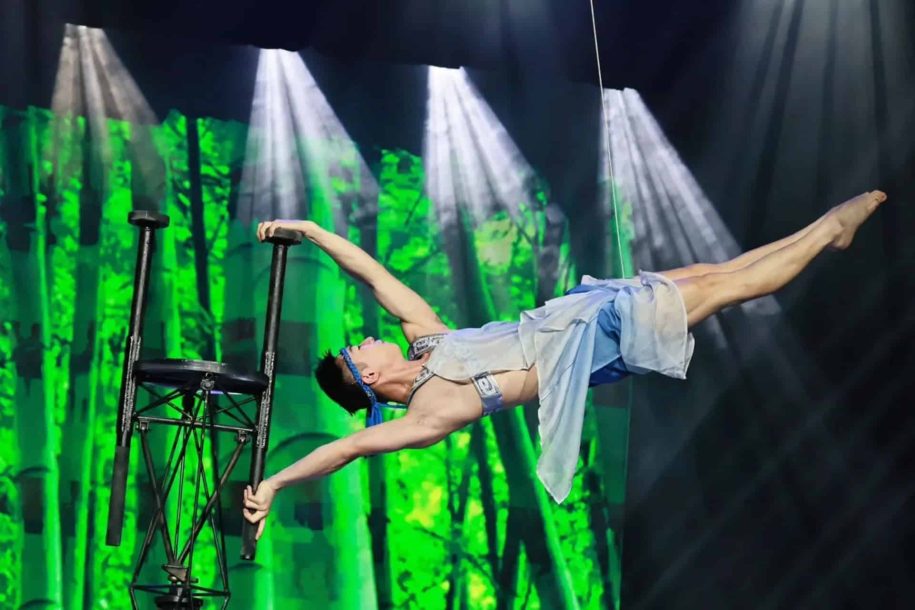
The History, Evolution, and Future of Chinese Acrobatics
Chinese acrobatics, known in Chinese as “Zájì” (杂技), is one of the oldest and most respected forms of performing arts in the country. With a history spanning more than 2,500 years, it represents not only artistic beauty but also the perseverance, skill, and creativity of generations of performers. Today, acrobatics is one of the most beloved cultural experiences for international visitors, especially at iconic venues such as Chaoyang Theatre in Beijing, where centuries-old skills come alive on a modern stage.
Ancient Origins — The Birth of Acrobatics in China
Chinese acrobatics can be traced back to the Spring and Autumn Period (771–476 BC), when early forms of juggling, balancing, and tumbling appeared as part of folk entertainment and village celebrations. Farmers and villagers developed these skills during rest periods, creating physical acts that soon spread through communities.
During the Warring States Period (475–221 BC), acrobatics became more refined. Historical records mention performers who mastered:
- Swordplay balance
- Handstands and tumbling
- Object manipulation
- Early contortion and flexibility acts
These early acrobats were admired for their agility and courage, and their performances laid the foundation for the art we know today.
️Imperial Patronage — Growth Through the Dynasties
It was during the Han Dynasty (202 BC–220 AD) that Chinese acrobatics truly flourished. Acrobatics evolved into a major entertainment feature at imperial banquets and royal celebrations.
The famous “Hundred Entertainments” became an organized collection of acrobatic arts, including:
- Plate spinning
- Human pyramids
- Tightrope walking
- Pole climbing
- Animal mimic performances
The Han Dynasty elevated acrobatics from folk entertainment to state-level performances, ensuring its preservation and continued development.
By the Tang and Song Dynasties, acrobatics had become even more sophisticated. Performers were known for their discipline, precision, and innovation. Acrobatics troupes began traveling across regions, spreading techniques and integrating different styles.
Challenges and Revival — Acrobatics in the Modern Era
As China moved into the modern period, traditional acrobatics faced challenges from changing entertainment forms. However, after the founding of the People’s Republic of China in 1949, the government renewed its support for cultural heritage.
Professional acrobatic troupes were established across the country, and training schools began teaching new generations of performers. Chinese acrobatics gained global recognition through participation in:
- International cultural festivals
- World circus competitions
- Large-scale opening ceremonies and TV galas
This period marked a major revival, combining tradition with innovation.
The Contemporary Stage — Acrobatics at Chaoyang Theatre
Today, Beijing’s Chaoyang Theatre is one of the most famous venues in the world for experiencing authentic Chinese acrobatics. The theatre blends classical techniques with modern stage effects, creating performances that amaze audiences nightly.
Typical modern acts include:
- High-speed diabolo spinning
- Bicycle balance formations
- Aerial silk and aerial hoop
- Motorcycle cage riding
- Human strength and flexibility acts
Chaoyang Theatre’s performances maintain the discipline of traditional acrobatics while incorporating lighting, sound, choreography, and storytelling to appeal to global audiences.
For many international travelers, Chaoyang Theatre represents the perfect gateway to understanding China’s cultural spirit and artistic brilliance.
The Future of Chinese Acrobatics — Innovation Through Tradition
Chinese acrobatics continues to evolve. As technology and creativity advance, new elements are being integrated into performances:
- Multimedia projection
- Dynamic stage engineering
- Fusion with dance, drama, and martial arts
- International collaborations
Yet the heart of acrobatics remains unchanged: discipline, artistry, and a deep respect for heritage.
In the future, Chinese acrobatics will continue to be a powerful cultural ambassador, connecting China with the world and inspiring new generations of performers and audiences.
Conclusion
Chinese acrobatics is more than a performance — it is a living testimony to China’s history, creativity, and cultural resilience. From ancient village traditions to spectacular modern shows, this art form has survived and thrived for thousands of years.
For visitors to Beijing, witnessing a live acrobatics show at Chaoyang Theatre is not just entertainment; it is experiencing a cultural legacy that has captivated audiences for centuries and continues to shape the future of performing arts.



Leave a Reply